The premise
Nobody buys a foil from a mood. They buy it from the wing section, the mast profile, the way the fuselage joins. This is a technical product for people who already know what they are looking at, and the image has to survive that scrutiny before it gets to be beautiful.
So the piece had one job: make the geometry and the material read, exactly, at every moment. Carbon fibre makes that hard. It is the one material that collapses the moment you take the fill away, and dark is where a product like this wants to live.
We set out to prove you can have both. A product film that reads as technically honest to someone who builds foils, and still looks like something a brand would put on a launch page.
Process & methodology
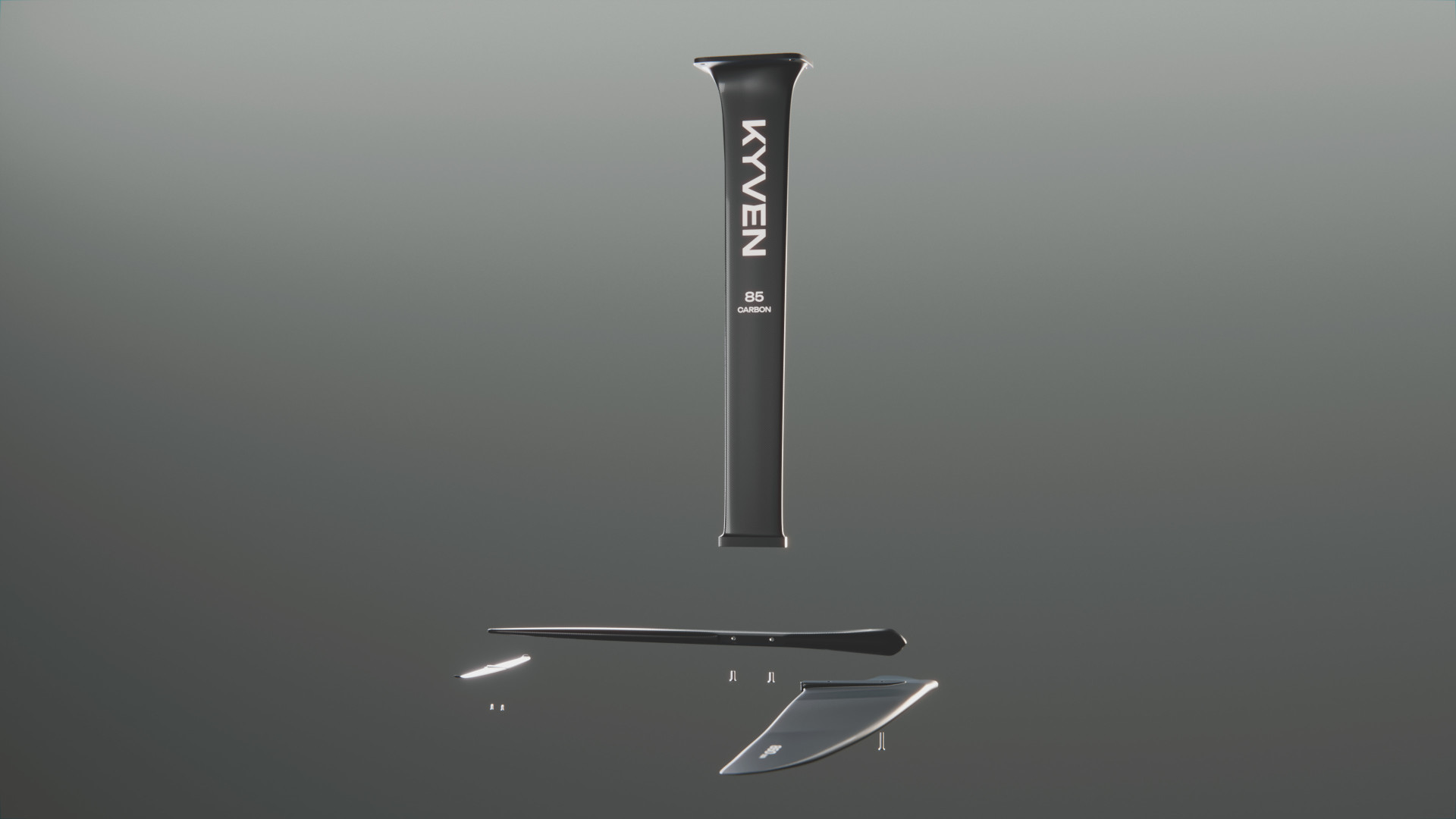
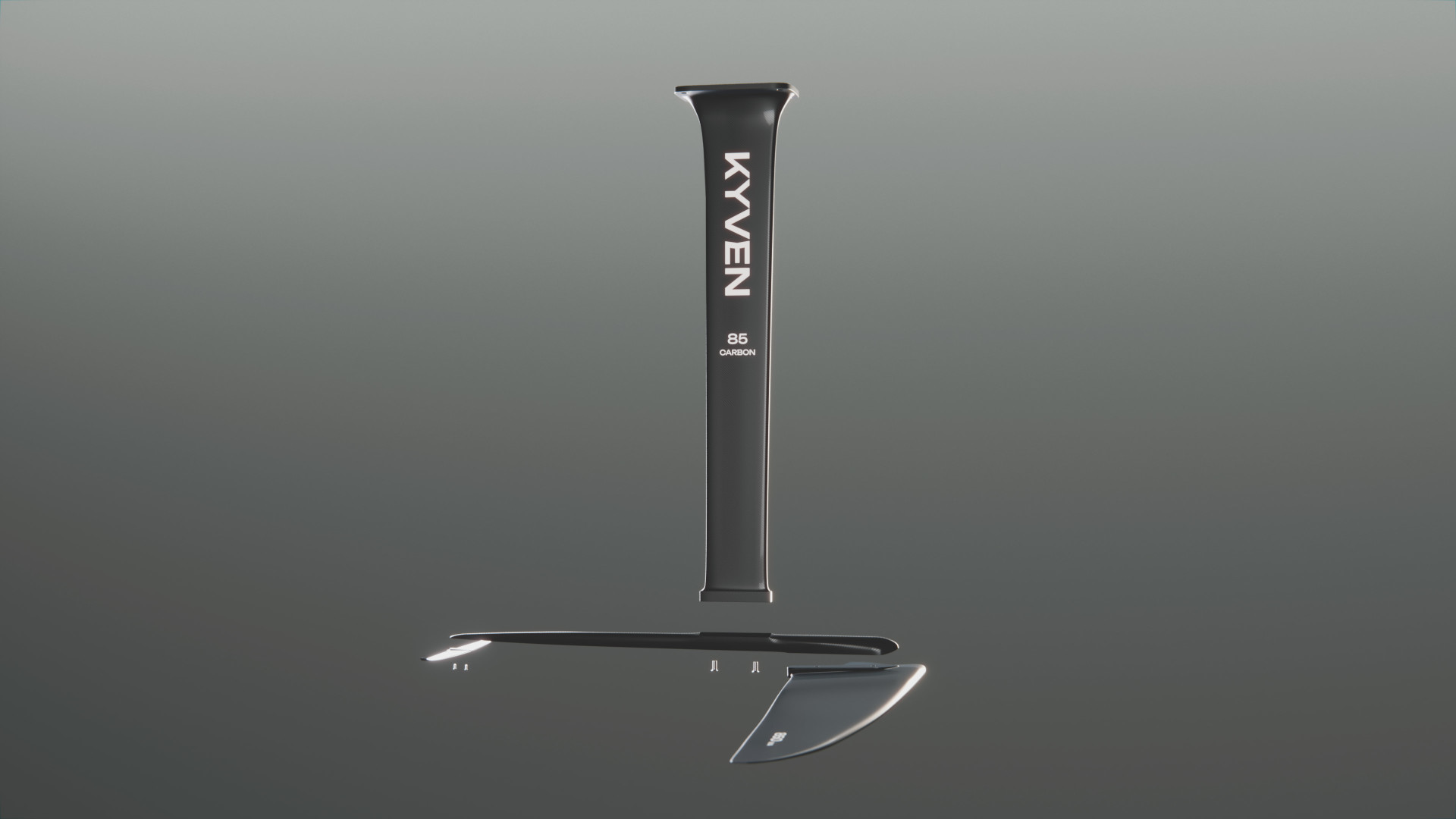
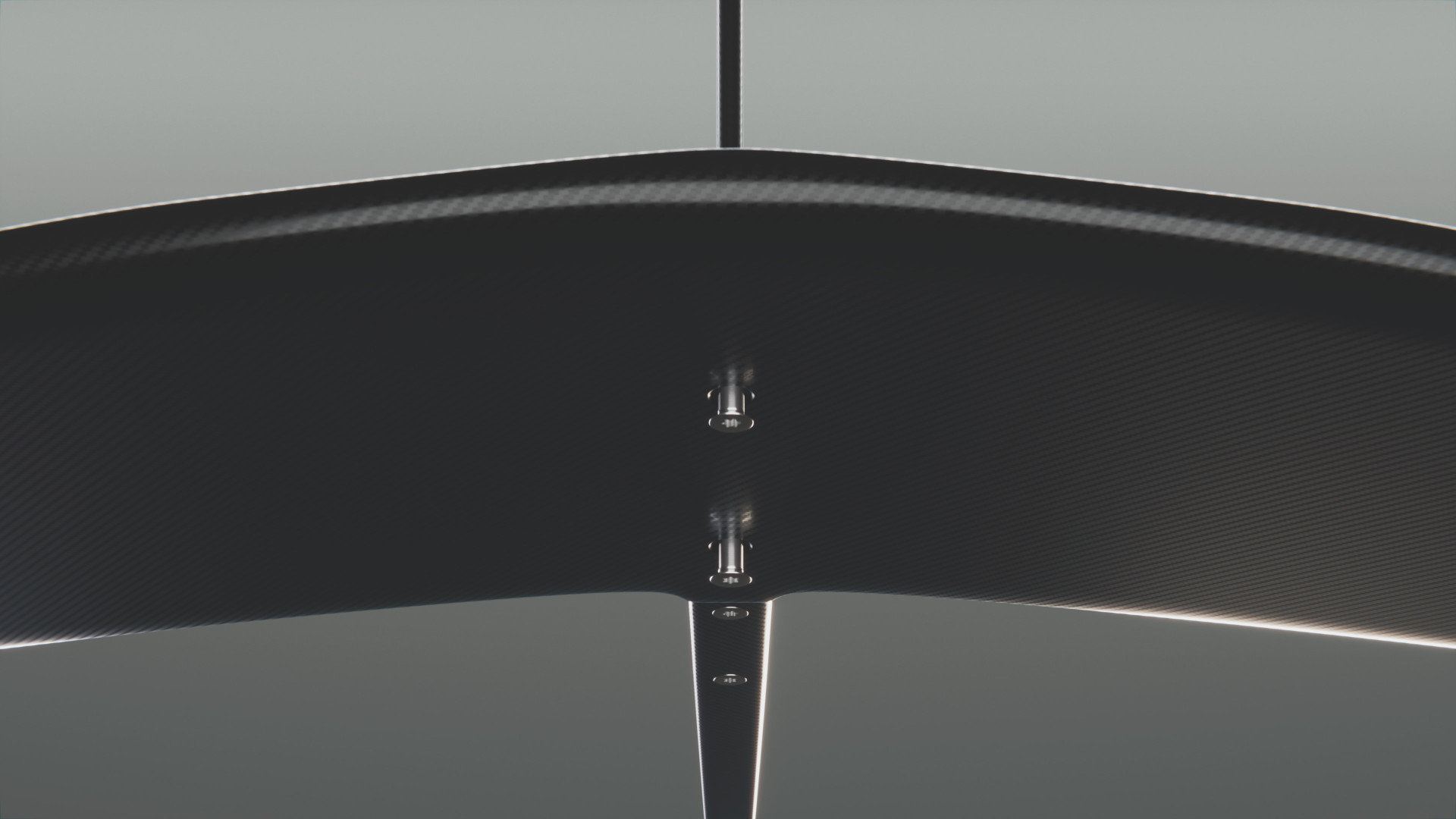
Carbon fibre is the hardest material to sell in the dark — take the fill away and it collapses into a silhouette. We built the mast, fuselage and wings in Blender, then put the work into the shader: anisotropic specular aligned to the weave direction with a clearcoat lobe over it, so the fibre still reads inside the shadow instead of dying there. The animation runs on the same principle. Screws never enter at constant speed — they approach fast, hold for three frames at the mouth of the hole, then seat with a long ease-out, each offset from the next so nothing lands in sync. The piece is lit twice: a bright technical set for the build, a two-rim black void for the reveal, and one transition between them where the key falls and the rims rise.
Art direction
The decision that governed everything: the carbon has to survive the dark.
That is a shading problem before it is a lighting problem. Anisotropic specular aligned to the weave direction, with a clearcoat lobe over it, so the fibre keeps reading inside the shadow instead of dying into silhouette. Get that wrong and no amount of rim light saves it.
Then timing. Screws never enter at constant speed. They approach fast, hold three frames at the mouth of the hole, and seat with a long ease-out, each one offset from the next so nothing lands in sync. A machine assembles on a metronome. A product film has to assemble like someone is doing it.
The piece is lit twice. A bright technical set for the build, where legibility wins. A two-rim black void for the reveal, where the object gets to be looked at. One transition between them, where the key falls and the rims rise.
Outcome
The assembly film is a format, not a trick. Any product made of parts can be built on screen: the build sells the engineering, the reveal sells the finish, and the viewer learns the product without being told anything.
What transfers here is the shading. The anisotropic carbon setup is now a material we bring to any woven composite: masts, frames, bike components, helmets, rackets. Same for the two-world lighting, a technical set and a dark reveal inside one continuous move, which works for any object that has to be explained and then admired.
And the timing rule stays. Nothing lands in sync. It is the smallest decision in the piece and the one that separates a product film from a CAD turntable.